
Introduction
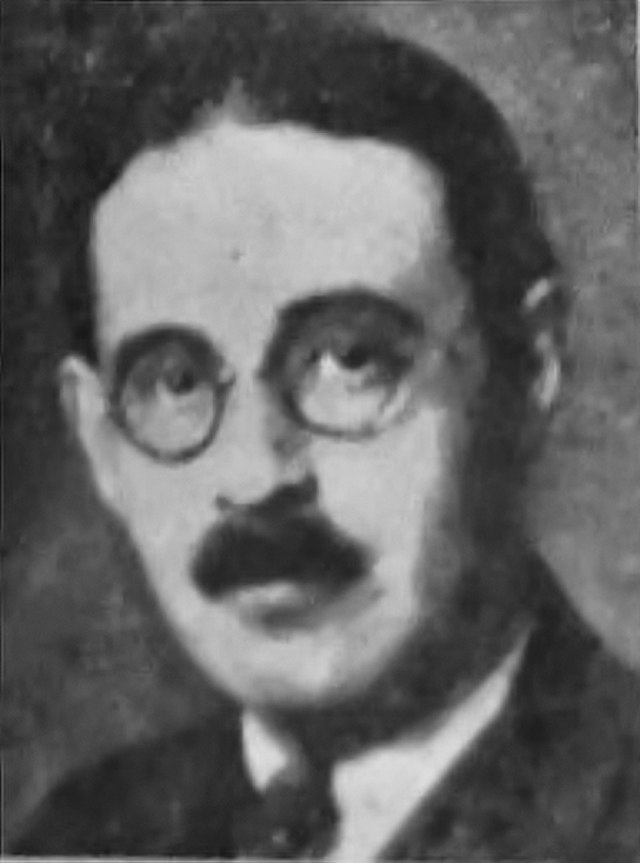
Harold Laski (1893-1950) was one of the most important twentieth century public intellectuals. He was Professor of Political Science at the London School of Economics (LSE), a centre for socialist thinking founded by the Fabians, from 1926 to 1950. He was one of the major theorists of democratic socialism. While Laski’s impact on the English-speaking world has been well studied (e.g., Newman 1993; Kramnick and Sheerman 1993), his equally profound influence on intellectual thinking and institution building in Republican China (1911-49) and its contemporary implications have been overlooked by both academics and lay audiences for decades.
My article entitled ‘Travelling Concepts: Harold Laski’s Disciples and The Evolution of the Human Rights Idea in Republican China (1919-49)’, recently published in Public Law 2022 (4), offers a case study of Harold Laski’s long neglected but significant influence on the evolution of human rights, one of the key concepts that has emerged in China’s search for modernity and democracy.
The metaphor of ‘travelling concepts’ originated from the seminal work The World, the Text, and the Critic, written by the renowned cultural critic Edward Said (1983), where he explored the idea of ‘travelling theory’ (Said’s primary concern was literary theory). He argued that the transfer of ideas and theories across time, geography and people is much influenced by ‘conditions of acceptance’ and ‘resistance’. Said’s study of the travel of ideas also embodies a second, less explicit aspect: ideas travel through the movement of people. On their journeys, travellers encounter people, places, ideas, cultures and institutions. When they are back home, they may bring back some of the ideas, cultures and institutions.
Borrowing the metaphor of ‘travelling concepts’ (see e.g., Twining 2005; Perju 2012) and drawing upon materials from biographies of Laski and his Chinese disciples, my article examines the way in which Harold Laski’s conception of rights helped his Chinese disciples situate the concept of rights outside the power of the state. Laski’s works enabled his Chinese disciples to recast the concept of rights as a conditional authority of the state through which the concept of human rights and their proposed constitutionalism were able to evolve.
Laski and his conception of rights
China’s search for modernity and democracy has been heavily indebted to Laski, even though Laski never set foot in China and China never occupied a place in his writing and thinking. The discussion and dissemination of Laski’s work was driven by Chinese intellectuals’ attempts to build a modern and democratic China. Laski’s idea of rights was particularly attractive to many Chinese intellectuals in Republican China. For Laski, rights are not created by the state; the state only recognises and realises rights. The development of the human rights idea in Republican China was highly influenced by Laski’s work, although Laski’s work was mainly concerned with the conception of rights in general rather than with the conception of human rights in particular.

Laski was a prolific writer, and throughout his life, he maintained a close and substantial link with legal scholarship. For example, in his early years of studying at Oxford, Laski was highly influenced by the work of Otto von Gierke (1841-1921) and Frederic William Maitland (1850-1906) and their writing about associations (Kramnick and Sheerman 1993: 59). Laski served as book review editor of the Harvard Law Review in the period between November 1917 and June 1919 (Kramnick and Sheerman 1993: 100). His publications on the personality of associations, the state and the history of the corporation in the Harvard Law Review also reflected the influence of Gierke and Maitland (Laski 1916; Laski 1917; Laski 1917).
During the 1920s Laski provided the intellectual framework for ‘a modern approach to public law’ (Loughlin 2019: 9). For Laski, law is ‘not the will of the State, but that from which the will of the State derives whatever moral authority it may possess’ (Laski 1925/1930: 289). Rights are therefore not created by law; rather they are the conditions of law (Loughlin 2021: 266). Laski defined rights as ‘conditions of social life without which no man can seek, in general, to be himself at his best’ (Laski 1925/1930: 91). For Laski, rights are essentially a social concept and embedded in a social milieu, and individual rights are closely related to social life. Rights are not therefore separate from duties.
Laski and his Chinese disciples
Laski started to influence Chinese students when he taught in the United States in 1916-20, and his major influence on Chinese students lasted for about two decades from the 1920s to the 1940s. Those students influenced by Laski’s teaching in the United States include Zhang Xiruo (1889-1973, master’s Degree from Columbia University 1919; Professor of Political Science at Tsinghua University and Secretary of Education 1952-58). Zhang Xiruo wrote Zhuquan lun (On Sovereignty) in 1925, one of the earliest introductions to Laski’s political thought in China. Zhang Xiruo also published a book review of Laski’s Communism in Xiandai Pinglun (Modern Review) in 1927, which was probably the earliest Chinese-language review of Laski’s work.
Laski also influenced Chinese intellectuals who did not study in the United States but travelled to Europe to pursue further study – for example Zhang Junmai (Chang Chun-mai, also known as Carsun Chang, 1887-1969), who pursued postgraduate study in Germany between 1920 and 1921. Zhang Junmai was a social democratic politician, theorist of human rights, and drafter of the Constitution of Republican China (Jeans 1997). He translated Laski’s Grammar of Politics into Chinese in 1926-28.
The British parliamentary system and cultural and philosophical tradition attracted many Chinese students to study in the United Kingdom. After Laski returned to England and started teaching at the LSE in 1920, he supervised a number of Chinese students, including Qian Changzhao (1899-1988, Secretary of the Ministry of Foreign Affairs 1928-1929 and Senior Vice-Minister of Education 1930-32), Chen Yuan (also known Chen Xiying, 1896-1970, Dean of the Faculty of Arts at Wuhan University), Hang Liwu (Han Lih-wu, 1903-1991, Professor of Political Science at the National Central University, founder of the British-Chinese Educational Association, and Deputy Minister of Education 1944) and Wang Zaoshi (1903-1971, lawyer and advocate for human rights and Head of the Department of Political Science at Guanghua University).
There were also students who may not have been directly supervised by Laski but considered themselves as Laski’s students – for example Luo Longji (Lo Lung-chi, 1898-1965, founder of the China Democratic League and advocate for human rights). In the 1920s, these Chinese elite students returned to China and became academics, government officials and journalists. They occupied positions of great influence before the Communist Party took power in 1949. My article focuses on Laski’s three Chinese disciples: Zhang Junmai (1887-1969), Luo Longji (1898-1965) and Wang Zaoshi (1903-1971).

Human rights: a travelling concept
In classical Chinese there is no equivalent word to ‘rights’ in English. The term ‘rights’ was first translated into quanli, denoting power and benefit, in the Chinese translation of Henry Wheaton’s Elements of International Law (1836) published in China in 1864, a project funded by the imperial government and coordinated by American Protestant William Alexander Parsons Martin (also known in Chinese as Ding Weiliang, 1827-1916) working in China at that time (Liu 1999: 127; Lin 2020: 402, 404; Jin and Liu 2009: 112). The concept of ‘human rights’ was also introduced to China by Japanese scholars in the same period and translated into renquan, which has multiple conceptions, and, on many occasions, was used interchangeably with the term quanli (Lin 2020: 406).
Up until 1900, the use of the term ‘rights’ in China was strictly limited to foreign affairs related issues such as international law, and the state was primarily regarded as the rights-holder (Jin and Liu 2009: 116). From 1900 to the mid-1910s, the term ‘rights’ became one of the most used political terms. The subject of rights was no longer limited to the state or groups but referred to individuals (Jin and Liu 2009: 124).
The Chinese conception of rights continued to evolve in the early twentieth century and intertwined with related key concepts such as liberalism, socialism, democracy and the rule of law, reflecting the changing understanding of the relationship between the individual, society and the state.
Laski’s Chinese disciples shared the same concern as Laski in their thoughts on the tensions between liberty and equality and between individualism and collectivism. They subsequently translated Laski’s works into Chinese and introduced them to China. Many of those students, for example, Luo Longji and Wang Zaoshi took an issue with the notion of the state as the source of rights, contributing to a fundamental rethinking of the nature of human rights.
Beyond the translation of Laski’s works, Laski’s Chinese disciples formed literary societies and provided intellectual platforms for the dissemination of Laski’s thought. In the 1920s, a group of intellectuals who had participated in the May Fourth movement and the New Culture Movement formed a small network (Wong 1993: 457-458). They sought to influence the public by writing articles on political issues under the Nationalist rule and by publishing journals and books (Lubot 1982: 81). Much support for civil liberties and human rights and criticism of the Nationalist Party’s dictatorship in the late 1920s came from the Crescent (Xinyue), a monthly magazine, named after Tagore (1861-1941)’s 1913 collection of poetry (Svensson 2002: 160).
The Crescent started as a purely literary magazine in March 1928 with prominent scholars as editors, including Hu Shi (1891-1962, a prominent scholar and diplomat in Republican China) and Luo Longji (Svensson 2002: 160). The magazine started to focus on publication on political issues, such as human rights and the rule of law, from its 10 April 1929 issue (volume 2, number 2) highlighted by Hu Shi’s article ‘Human Rights and the Provisional Constitution’ (Lubot 1982: 82). Those who wrote for the magazine formed an intellectual network called the ‘Crescent Society’ (xinyue she) and were representative of an intellectual shift in thinking (Svensson 1982: 160).
Following Hu Shi’s ‘Human Rights and the Provisional Constitution’, in Volume 2, Number 5 of the Crescent Magazine (1929), Luo Longji published an essay “On Human Rights” (Lun renquan), which stood out as the most theoretically sophisticated discussion of the meaning and nature of human rights among the numerous articles on human rights published in the magazine.
In his article ‘On Human Rights’, Luo Longji examined two fundamental questions: ‘What are human rights? What are the human rights that we currently desire?’. In seeking answers to these questions, Luo Longji often quoted Laski’s A Grammar of Politics. Luo Longji argued: ‘Human rights, simply put, are the rights that [are needed] to be a person (zuo ren). Human rights are those conditions necessary for one to be a person’ (Luo 1929/1999: 80). Those conditions necessary for one to be a person include ‘the rights of clothing, food and shelter, as well as the protection of bodily safety’ (Luo 1929/1999: 81). Yet, conditions necessary for one to be a person are not limited to those mentioned above. They also include conditions for developing one’s nature and personality and for becoming the best possible person one can be (Luo 1929/1999:81). Further, as an individual is also a member of society, an individual has an obligation to allow ‘the great majority to enjoy the greatest possible well-being’ (Luo 1929/1999:82). Luo’s view on the relationship between an individual and society is clearly influenced by Laski: ‘I have, as a citizen, a claim upon society to realise my best self in common with others’ (Laski 1925/1930: 39).
For Luo Longji, ‘function’ is essential in defining human rights. His argument echoed Laski’s comment on the nature of rights that ‘rights… are correlative with functions, I have them that I may make my contribution to the social end… Function is thus implicit in right’ (Laski 1925/1930: 94). Luo Longji argued that anything that is necessary for performing the following three functions is a necessary condition for one to be a person, and therefore constitutes a human right: ‘first, preserving life; second, developing individual nature and nurturing personality; and third, attaining the goal of the greatest well-being for the vast majority of humanity’ (Luo 1929/1999: 82).
In terms of the relationship between the state and human rights, Luo’s view was highly influenced by Laski’s argument that ‘rights… are prior to the State’ and that ‘[t]he State, briefly, does not create, but recognises, rights…’ (Laski 1925/1930: 89, 91). For Luo, human rights were not necessarily dependent on law: ‘above the law there are human rights, and law does not necessarily completely exhaust human rights’ (Luo 1929/1999: 82). The function of law is to protect human rights.
Conclusion
In summary, my article ‘Travelling Concepts: Harold Laski’s Disciples and The Evolution of the Human Rights Idea in Republican China (1919-49)’ builds on the metaphor of ‘travelling concepts’ and draws upon Said’s travelling theory and materials from biographies. Said’s travelling theory has limits, as it focuses on the transfer of ideas but does not go much further to study the institutionalisation of ideas. The combination of these methods and theories, however, enables us to draw links between the studies of ideas and institutions, as well as between macro level (e.g., systems and institutions) and micro level studies (e.g., people and ideas) of the travel of legal concepts. The combined theories and methods therefore help explores the ways in which Laski’s conception of rights was translated and recast by his disciples as a human rights idea in Republican China (1911-49). The findings of this study shed new light on our understanding of the ways in which legal concepts may ‘travel’ across different contexts.
Posted by Professor Ting Xu, Essex Law School, University of Essex
Suggested citation: T Xu, “Harold Laski, Travelling Concepts, and the Evolution of the Human Rights Idea in Republic China (1919-49)”, BACL blog, available at https://wp.me/p80U0W-1rY
Picture credits:
- Harold Laski: Wikimedia
- Luo Longji (罗隆基): Wikimedia
* * *
This piece belongs to the “Cross-jurisdictional dialogues in the Interwar period” series dedicated to less-known legal transfers which have had a palpable impact on the advancement of the law. The Interwar period was a time of disillusionment with well-established paradigms and legislative models, but also a time of hope in which comparative dialogue and exchange of ideas between jurisdictions thrived. The series is edited by Prof Yseult Marique (Essex University) and Dr Radosveta Vassileva (Middlesex University)
 British Association of Comparative Law

1 Comment
Comments are closed.